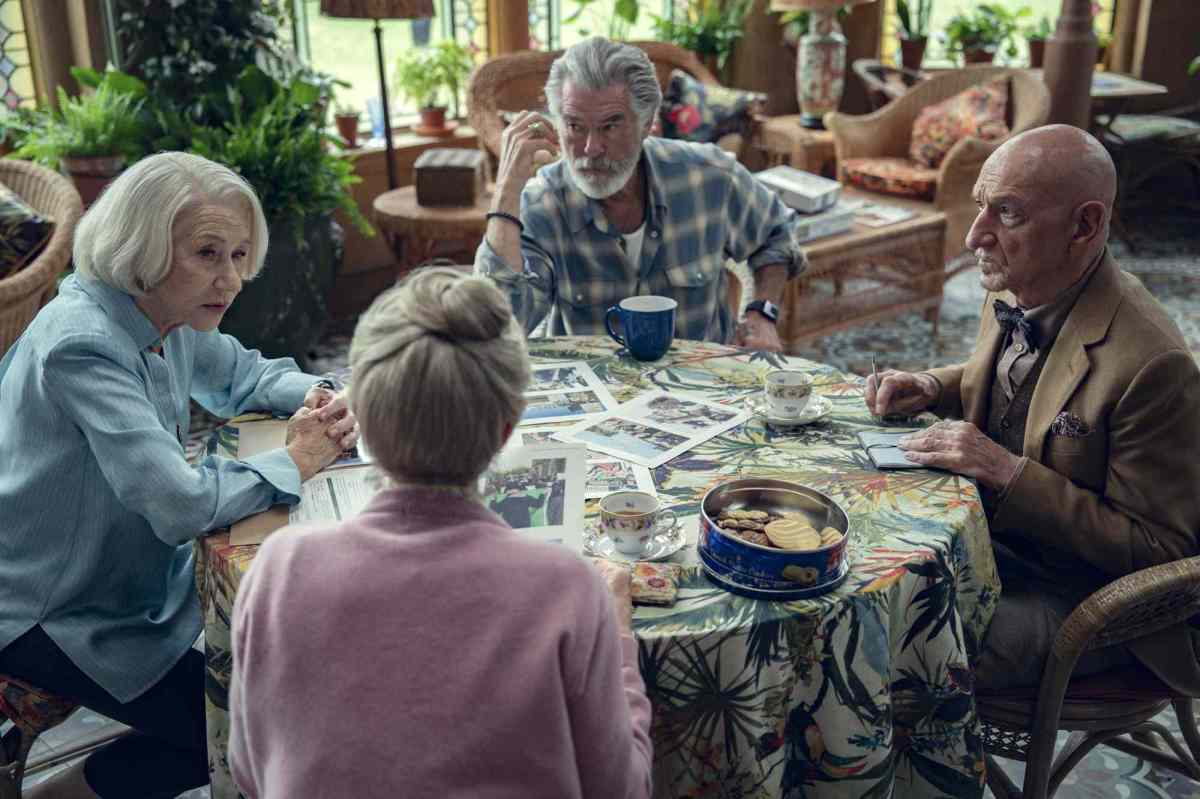
After enjoying a sushi dinner with my cousin, I found myself wide awake and browsing Netflix for something to watch. At the top of the list was The Thursday Murder Club, a made-for-TV murder mystery featuring a stellar cast: Helen Mirren as Elizabeth Best, Pierce Brosnanas Ron Ritchie, Ben Kingsley as Ibrahim Arif, and Celia Imrie as Joyce Meadowcroft. With such talent, I expected an entertaining whodunit. The premise—a group of senior citizens in a retirement home investigating unsolved murders—seemed promising, so I gave it a try. While the film was engaging and the acting lighthearted, its underlying messages and false premises left me deeply troubled.
A Flawed Premise: Misrepresenting Justice
The story begins with a cold case from 50 years ago: the murder of a young woman, with the prime suspect—her boyfriend—allegedly let off by police because he was a “good old boy.” This setup immediately struck me as implausible. Historically, murder was treated with utmost seriousness, and it’s unlikely that authorities would dismiss such a case so casually. The film’s narrative suggests that systemic corruption, particularly among white Western males, allowed the suspect to evade justice. This feels like a heavy-handed attempt to portray traditional societal structures as inherently flawed, a trope that oversimplifies complex issues and paints an unfair picture.
Elizabeth Best, the club’s leader and a retired MI6 agent, learns about this case from a dying friend in hospice, a former policewoman named Penny Grey, who witnessed the boyfriend’s escape from justice. This subplot sets the stage for the film’s troubling moral ambiguity, which I’ll address later.
A Series of Murders and Questionable Motives
The second murder involves a gangster-like figure, Bobby Tanner, who supposedly protects the Coopers Chase retirement home from being sold. After a public argument with his business partner, Ian Ventham, becomes the obvious suspect in Bobby’s eventual death. Ian, a real estate developer, plans to sell the property, including a cemetery, displacing the seniors. In a bizarre scene, Ian sends an employee—a Polish immigrant gravedigger named Bogdan Jankowski—to begin excavating graves alone, while he confronts a crowd of protesting seniors, including Elizabeth, Ron, Ibrahim, and Joyce. Elizabeth engages Bogdan in a sympathetic conversation, portraying him as a decent person trapped by his illegal status and inability to visit his mother in Poland. This moment feels like a deliberate attempt to contrast the “virtuous” outsider with the supposedly corrupt locals.
The third murder is Ian Ventham himself, who dies under mysterious circumstances. The plot thickens as Elizabeth’s husband, Stephen Best, who suffers from memory issues, pieces together clues and accuses Bogdan of Bobby Tanner’s death. Additionally, a subplot involves Ron Ritchie’s son, Jason Ritchie, who is jailed as a suspect in Ian’s murder. When Ron presses Jason to reveal his whereabouts during the crime, Jason admits to an extramarital affair with Ian’s wife, Gemma Ventham. Shockingly, Ron accepts this revelation without judgment, as if infidelity is a norm to be overlooked. This scene further underscores the film’s failure to hold characters accountable for morally questionable actions, instead normalizing behavior that disregards personal responsibility.
A Disturbing Moral Framework
The film resolves the murders in reverse order, unveiling a narrative that justifies wrongdoing under the guise of moral necessity. Bogdan, we learn, killed Bobby Tanner accidentally during a confrontation over his withheld passport. The film presents this act as understandable, implying that Bobby’s criminal behavior excuses the killing. However, this ignores the fact that Bogdan could have sought legal recourse to resolve his situation. By framing the manslaughter as a tragic necessity, the writers push the idea that illegal actions are justified if committed by a “good” person.
The earlier murders are even more troubling. The cold-case killer, buried in the cemetery, was murdered years ago by Penny Grey, the hospice-bound policewoman, who took justice into her own hands. To protect her legacy, her husband, John Grey, poisons Ian Ventham. Elizabeth, aware of these crimes, chooses not to report them. Instead, she allows John to euthanize Penny and take his own life, presenting these acts as compassionate. This resolution glorifies vigilantism, euthanasia, and suicide, suggesting that such actions are acceptable if motivated by personal loyalty or perceived justice.
Propaganda and the Culture of Death
The film’s climax, marked by a soliloquy from Ibrahim Arif, reinforces its troubling message: killing is justifiable if the end goal feels righteous. This aligns disturbingly with the notion that “the ends justify the means,” a philosophy that undermines the sanctity of human life. The portrayal of euthanasia and suicide as noble acts is particularly egregious. Penny Grey, though unresponsive, may still have had moments of consciousness or the potential to awaken. John’s decision to end her life robs her of that possibility and any chance to reckon with her past actions. His subsequent suicide is framed as a tragic but acceptable escape from accountability, further eroding moral boundaries. Similarly, the casual acceptance of Jason’s affair as a mere alibi, rather than a breach of trust, reflects the film’s broader tendency to excuse actions devoid of responsibility.
The Thursday Murder Club uses its charming cast and lighthearted tone to mask a narrative that normalizes morally reprehensible actions. By presenting murder, vigilantism, euthanasia, suicide, and infidelity as justified or inconsequential, it subtly promotes a “culture of death” that devalues human life. This is not an isolated issue; many modern films casually depict violence and moral ambiguity without regard for the consequences. While the acting and pacing made the movie watchable, its underlying propaganda left me questioning whether our society has become too desensitized to such messages.
Conclusion
The Thursday Murder Club could have been a fun murder mystery, but its flawed premises and moral justifications overshadow its entertainment value. The film’s attempt to glorify illegal and immoral acts under the guise of compassion is deeply concerning. As viewers, we must question narratives that erode the value of human life and promote a worldview where the ends justify any means. This movie, sadly, is a missed opportunity to tell a story that respects both justice and humanity.







 The Metamorphosis of Life